

How to Prepare for Your Interview: Support Staff Roles
You made it to the interview — that means your resume already did its job. This guide is about what happens next: preparing so you walk in ready, instead of hoping you'll think of the right thing to say in the moment.
Work through each section before your interview. None of it takes long, but all of it matters.
Step 1: Research the Company
Don't walk in blind. You don't need hours — 20-30 minutes of focused research is enough to sound informed instead of generic.
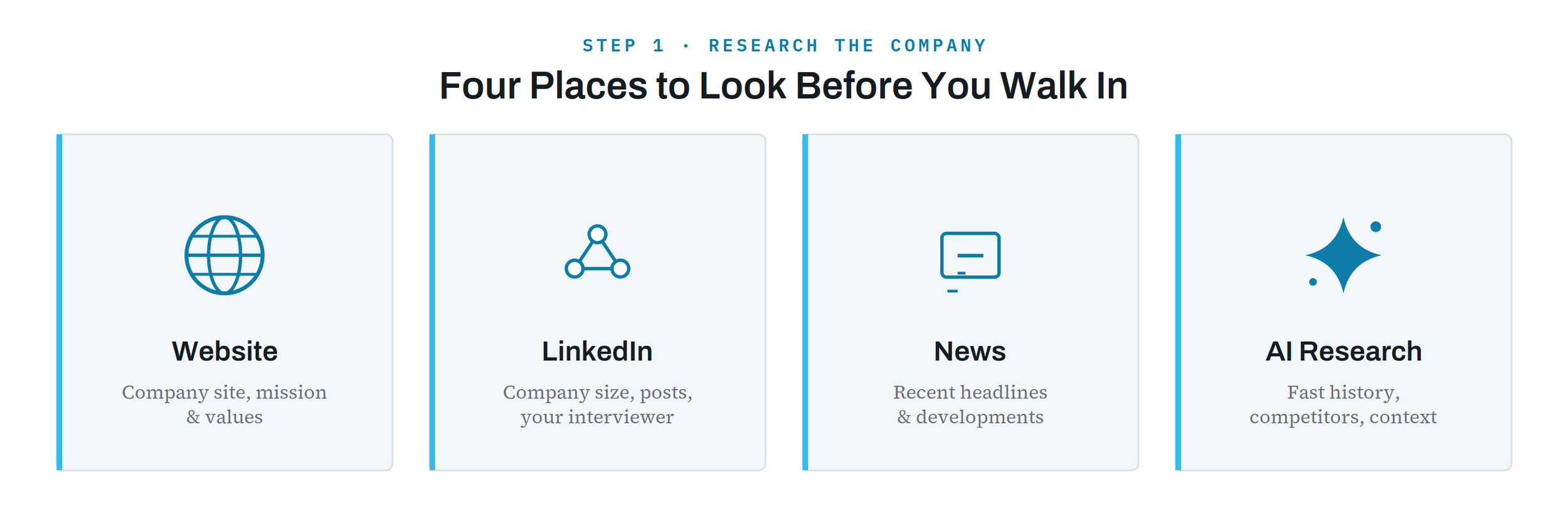
Company website — what they do, who they serve, and their mission/values page
LinkedIn company page — company size, recent posts, and who you'll be meeting with
Google News search — recent headlines: expansions, layoffs, leadership changes
AI research shortcut — ask an AI tool (Gemini works well for this) for a quick history of the company, its competitors, and recent developments
If the interview is virtual: test your tech the night before — video software installed and updated, camera/mic checked, background uncluttered.
What you should walk in knowing: what the company does and who their customers are, why they might be hiring for this role, and one thing you found genuinely interesting in your research.
Step 2: Mine Your Own Work History for Stories
This is the part most candidates skip, and it's the part that matters most. Interviewers remember specific stories, not general claims.
Go role by role. For each job you've held, think through what you were actually responsible for day to day. Pull 2-3 concrete examples from each role — not "I handled invoices," but a specific situation with a beginning, an action you took, and a result.
Push for numbers. Volume, error rate, turnaround time, how many people or vendors or records you managed. If you don't remember the exact number, build a reasonable estimate — a round number said with confidence beats a vague answer every time.
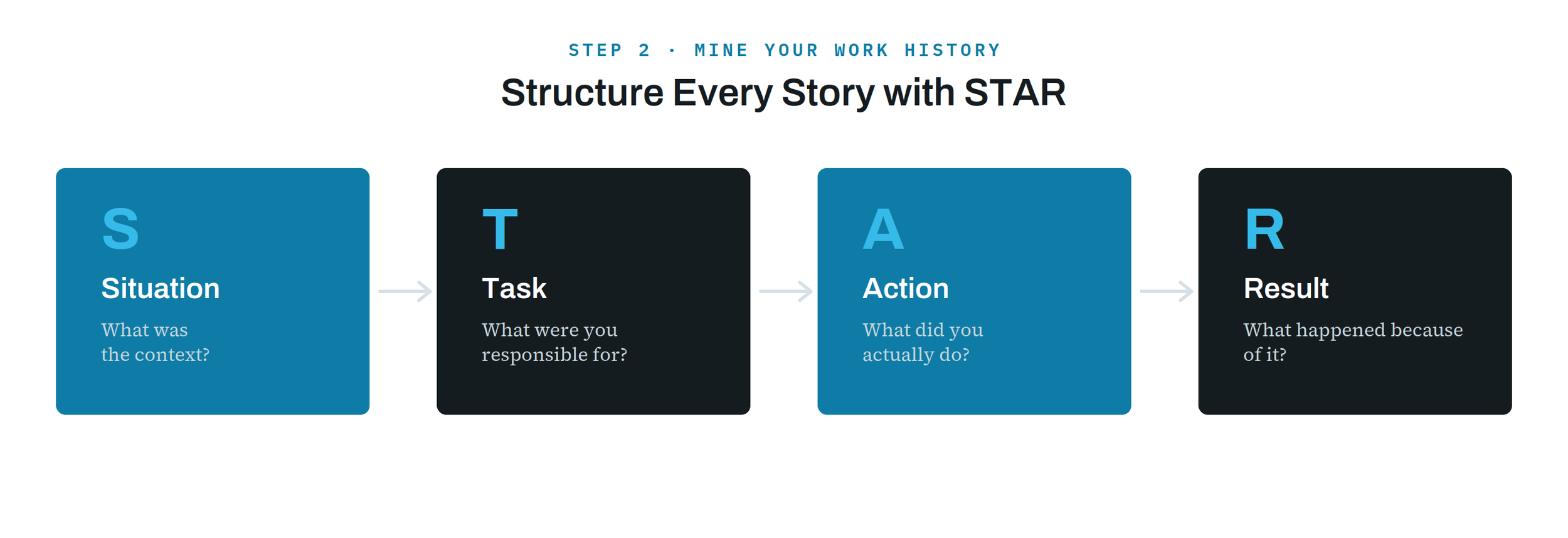
Structure your answers with STAR:
Situation — what was the context?
Task — what were you responsible for?
Action — what did you actually do?
Result — what happened because of it?
Show, don't tell. Saying "I'm organized" means nothing on its own — everyone says that. A specific story that demonstrates it is what actually convinces someone.
It's completely fine to bring a one-pager of key numbers or notes with you into the interview. Interviewers are usually impressed by this, not put off by it.
Match stories to likely questions: a time you caught a mistake, a time you had too much on your plate, a time you had to learn something new fast, a time you dealt with a difficult coworker or customer.
Step 3: Turn the Job Posting into Practice Questions
Go back through the job posting one more time. For every responsibility listed, ask yourself: how would they question me on this?
Example: if the posting says "maintain accurate filing and recordkeeping," expect something like "tell me about a time you caught an error in your own recordkeeping."
The more of these you predict ahead of time, the fewer questions catch you off guard.
Step 4: Common Questions and How to Answer Them
"Tell me about yourself" — keep it short and job-relevant. This is a 60-90 second summary, not your full life story.
"Why this role / why this company" — tie your answer back to your research from Step 1.
"What are you looking for" — be honest and specific.
Behavioral questions ("tell me about a time...") — use the stories you built in Step 2.
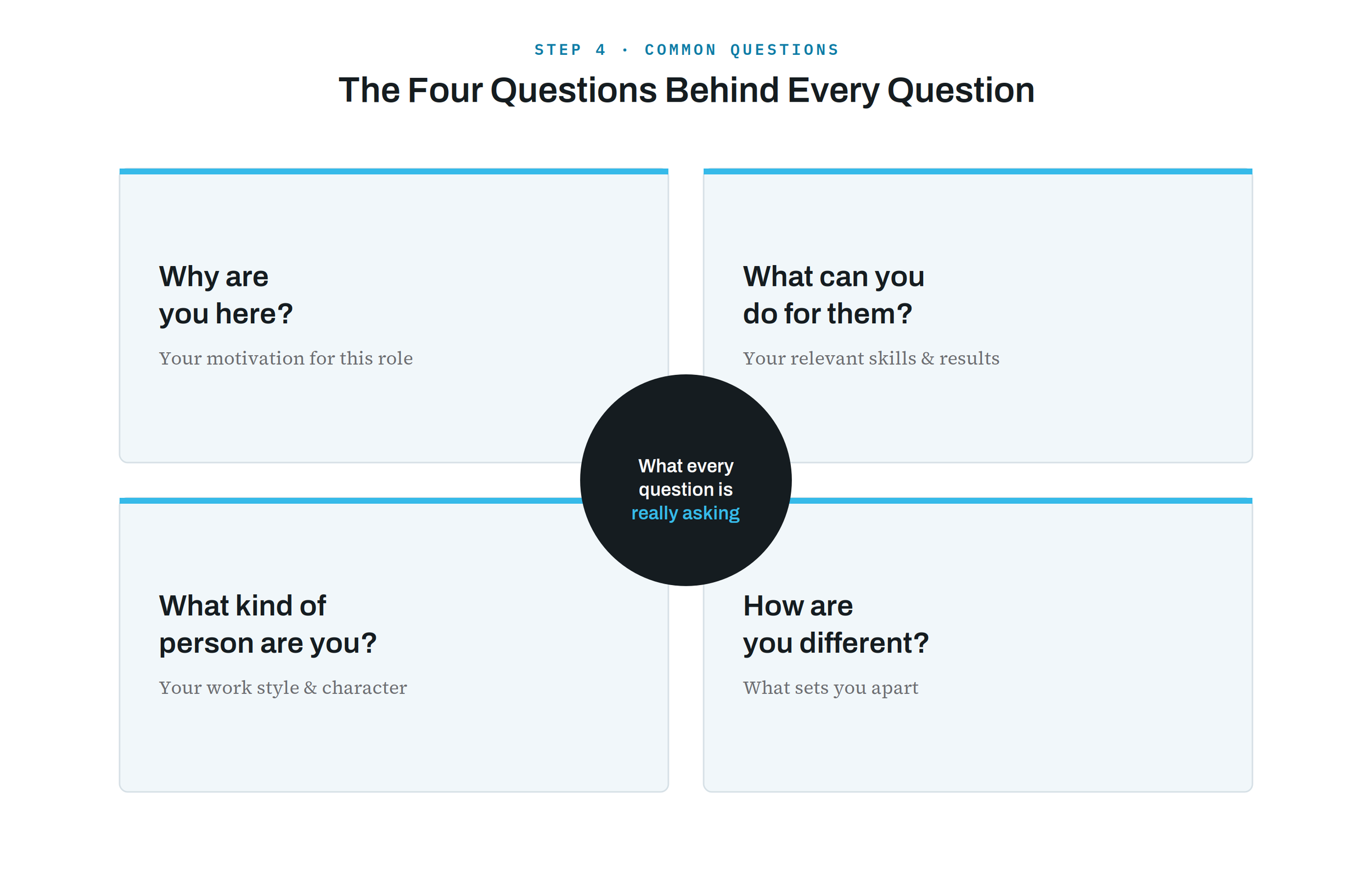
Underneath most questions, the interviewer is really trying to answer one of four things about you: why are you here, what can you do for them, what kind of person are you, and how are you different from other candidates. Keep individual answers to about 1-2 minutes.
Step 5: The Money Question
If you're asked about salary expectations, defer to what you've discussed with your recruiter — they've set the range with the client already, and staying consistent with that number protects you. Simply say, “The recruiter shared with me that the role is paying between $X and $X and that’s where I’m most comfortable.”
Don't negotiate salary live in the room. That conversation happens through your recruiter after the interview.
Step 6: Nerves and Delivery
Eye contact, a firm handshake, and good posture go a long way before you say a word
It's okay to pause before answering — a short pause reads as thoughtful, not unprepared
Practice your answers out loud beforehand, but don't memorize a script word for word
Have 2-3 questions ready to ask at the end
Questions to ask the interviewer:
What does success look like in this role in the first 90 days?
What's the biggest challenge facing the team right now?
What do you enjoy most about working here?
Step 7: What Not to Do
Don't badmouth your current or past employer, even if asked directly why you're leaving
Don't check your phone during the interview
Don't be late — arrive about 10 minutes early, not 30
Step 8: After the Interview
Send a thank-you email the same day. Mention a specific detail from the conversation — not a generic "thanks for your time."
Follow up with your recruiter on how it went, same day if possible.
Here's why this matters as much as anything else in this guide: how you follow up is itself part of how you're being evaluated. Following up quickly and mentioning specific details shows the same follow-up skills and attention to detail the employer is trying to assess in the interview itself.